|
In 2020 we were hit pretty hard with COVID and a quarantine to last nearly a year now. Here we are in 2021 and the country, especially Texas, is dealing with some crazy weather. If you are in Texas, then you know what's going on. If you aren't from Texas you may know how to handle what is going on. If you aren't from Texas and have never experienced a winter snow storm before, your anxiety may be through the roof at the moment. I spent the majority of my childhood and late teen years growing up in Oregon and Idaho. Both places reach temperatures well below freezing and into the negatives. We had to learn how to live with the snow for up to six months of the year, the upside is that those states are set up to handle that temperature drop. Texas and its residence are not. Let me share with you how I learned to handle the anxiety and boredom that comes with freezing temperatures. **If you are unaware of how Texas works, its power system is not connected the way the rest of the country's system is. Texas is separate and decides to do everything differently than everyone else.They also had this exact situation happen in the 80's and weren't prepared then. They learned nothing from that experience, so let us now be the ones to take initiative on how to handle any situation that comes up like this again.** 1. My dad taught me to always be prepared no matter what. If the situation never happens, at least you had what you needed to survive it. My partner and I will grab a little extra food at the store, a little extra toiletries and supplies. We do not over-buy and stockpile. This is a way to prepare for any situation. This could have helped many who lost power to still have foods they could eat cold or even cook on their gas stove top for a short period of time to gain some sustenance. Over-buying and panicking only causes MORE issues for the rest of us. Things restock and most situations/circumstances are not forever, only temporary. 2. There is plenty to do that does not require technology or the internet! I grew up in a house where we were only allowed 1 hour of television, a movie or 1 hour of video games per day. The only time our computers were on was if we had school work to do. In the early '00s that wasn't even heard of yet. Here are some fun things we did even when the power was out.
I grew up in a very loving and supportive home, any time one of us had anxiety we were there to hold, help, and guide them through it. When this happens my mum would hug me, tell me everything was going to be okay, then ask me how I was feeling and what she could do to help. That last step is very crucial. If you don't ask the anxious party how they are and what you can do to help, you may worsen their anxiety as they came to you seeking help and solace. Any time my partner has an anxiety attack or emotional trigger, I hug him, we lie down on the bed and breathe together while he tells me what he is feeling or going through. Just that act of listening to someone or being heard can relieve much stress and anxiety from our nerves. This is not the answer some want, however, meditation is a fantastic way to calm the nerves, return hormones to their proper levels and over time you will be able to handle stressful and anxious situations much easier. It takes practice and patience for this to occur, be patient and kind to yourself through this process. Meditation also allows us to compartmentalize easier over time as well. Being able to dissect a situation while it is still happening and keeping your wits about you is highly beneficial and healthier on the body, mind, soul, and nervous system. When the power does come back on, don't overload by turning everything on and the heat up. It's always a good idea to keep the heater down around 68 anyways. Your body can become ill if you are going from extreme cold to hot too often. We keep our house around 68 and have extra blankets and clothing to keep us warmer if need be. My dad always said "You can always put more clothing on, you cannot always take it off. Well, you can, but some of your company may not like it!" Each time the power returns we:
When it comes to needing to leave anywhere, we simply stay put. Honestly your gym time can wait. Do an at-home HiiT bodyweight workout instead if you really must workout. It is better to hold off however, to conserve energy and food in these circumstances. A LISS day is also acceptable for keeping yourself moving, or even just simple stretching and foam rolling. Giving your body a break is not always a bad idea, your muscle will not atrophy overnight or even within a few days. Risking your life and others just to lift some weights, just don't! Plus, in 2021 it's pretty likely that your neighbors have some gym equipment or an actual garage gym. Make friends and have a lifting party! I remember the only time we ever went anywhere on days like this as a child was if we truly needed to go to the store or it was time for church. (Yes, I grew up going to church in a very religious state.) My dad emphasized how much more dangerous ice was than hydroplaning on rain water. Unfortunately Texas is not set up to handle snow, salting their roads, and for their citizens to be driving anywhere unimportant, like the gym. So next time Mother Nature makes a crazy call to your doorstep, I hope these tips and tricks can help you make it through!
0 Comments
Hello and good day my wonderful Warriors! Awhile back I made a video explaining the science behind our workouts and how to improve them or get the most out of them. I just wanted to go over this again as it is a very crucial aspect of fitness to understand. We want to always be progressing and moving forward. Without changes and switch ups this actually becomes incredible impossible. Yes, yes! I said the dirty word! Impossible. Without proper shock and adaptation to the muscle, without hitting all the angles of the muscle fiber we are missing activation. This leads us to less progress and less growth. Be it strength or size. So if you are looking into why you haven't been seeing any results lately, try switching up the style of which you are working out. Hello again Warriors! I am continually asked where I get my workout clothing and why. Since I recently bought outside of my normal brand I wanted to give a product review on a few items I bought versus the Savage Barbell brand I continually wear daily. My first purchase was from Ryderwear. I will say that their shoes are my favorite leg day shoe, their clothing for women... a total bust. Not only is the fabric incredibly sheer, which a lot of people are uncomfortable with, but the seriously high waist was annoying. I know you ladies LOVE that high waisted sh*t, but it really isn't flattering or good for the system. You lose some beautiful abdomen lines when we wear those high waisted shorts and leggings. The material was comfortable and moveable, this was nice. The "shadowing" on the shorts were very distracting and unflattering. My booty is not small enough to keep the shorts where they should have "enhanced" the look of how large my rear-end is. I don't need help with this. Girls who are in the beginning of their fitness journey looking for that full booty look are looking for leggings like this. Not fit girls. My sports bra was pretty large for a medium and long. Compared to my Savage bras this felt like a circus tent. My partner made a great observation that Ryderwear clothing makes even the most beautiful and fit of ladies look like a 12 year old, pre-pubescent child. My second purchase was from Feed Me Fight Me. I love donuts and found a wonderful red outfit that matched perfectly with my donut sprinkle shoes from No Bull. When the outfit arrived I was ecstatic! Upon putting on the outfit I was highly disappointed once again. As the material is not made for ladies who have put in that booty work. Immediately my tattoos began to show through on my shins! Then I turn around to reveal my pretty bare booty and thong through my pants. (The picture is a little dark, my partner confirmed being able to see completely through the leggings in our KITCHEN). The material was once again incredibly comfortable. I am sure I would have loved to workout in them, but there is simply no way I am squatting in sheer pants. The bra fit like a glove and I felt very secure. Being a full D cup it can be difficult to find bras that fit properly, offer enough support and hold all of me in. Now the brand I have gone with for the last few years is Savage Barbell. I love them so much they made me a sponsored affiliate. I have bought their clothing for the last three years. I have only ever had to replace one pair of leggings due to wearing them 13 hours a day, 5 days a week for nearly 2.5 years before that wear happened. They finally just worn thin in the material and needed to be replaced. The stitching was still fully intact, no holes anywhere. Just normal stretching over time and wear on the material. Savage offers great support in both their bras and their leggings/shorts. While I am still not a super fan of anything high waisted, their shorts and leggings roll over easily to allow me to keep my low waisted bottoms. Savage prices are much more reasonable as well. Pricing leggings at roughly $50 per pair versus $80 per pair from most other companies. Better quality for a better price. The verdict, I will more than likely try another brand someday, however Savage will always be my go to and highly recommend workout clothing brand. 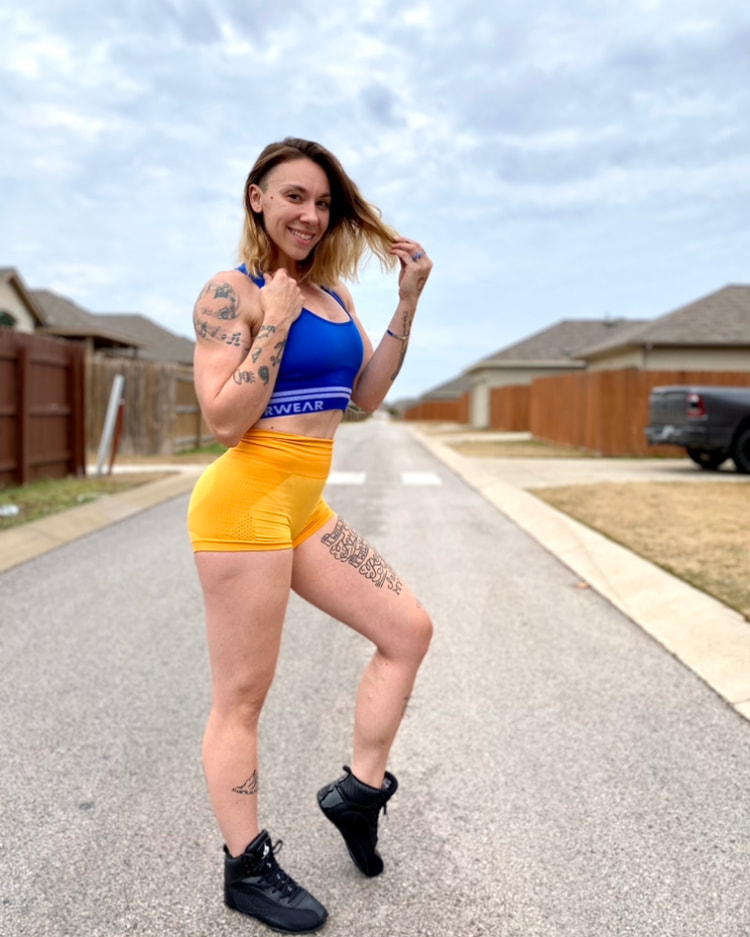 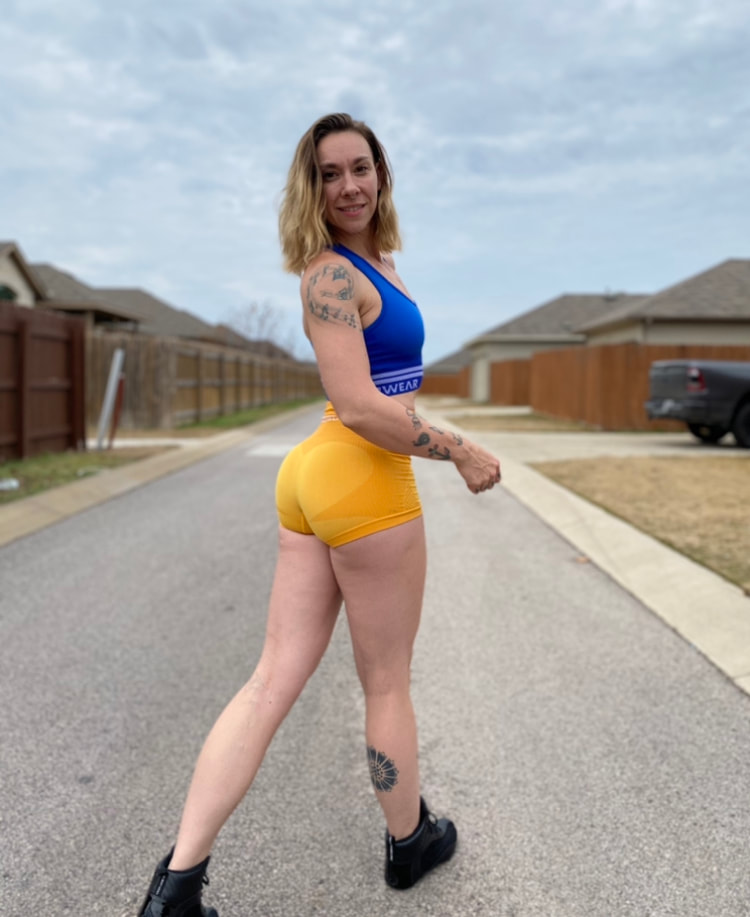  Ryderwear set: Top: Medium $25 on sale Bottoms: XS $18 on sale 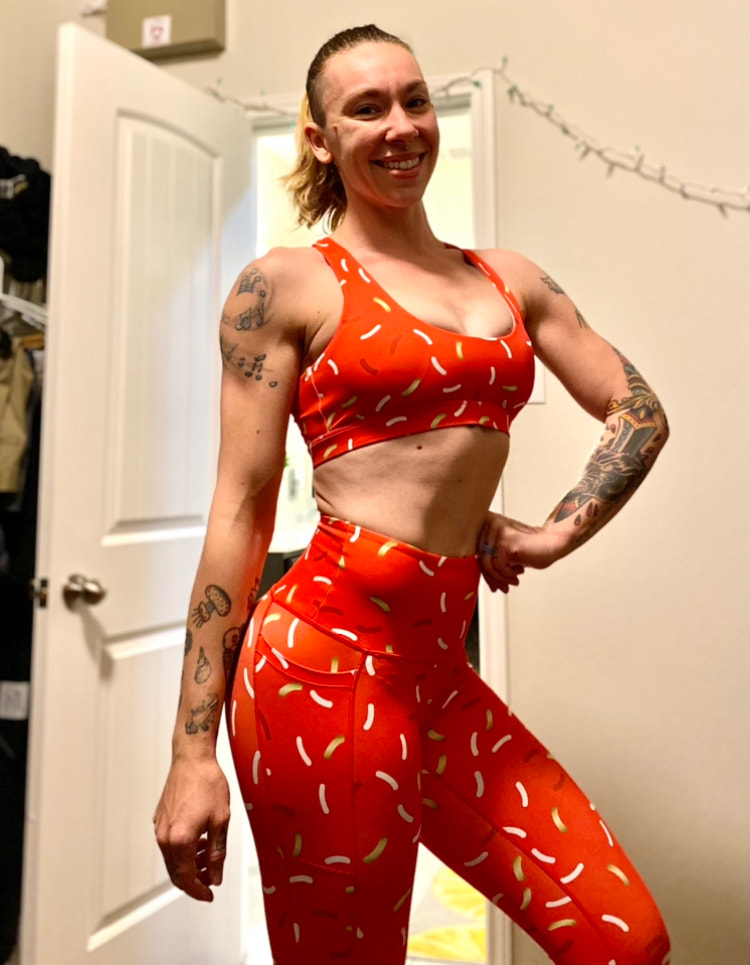 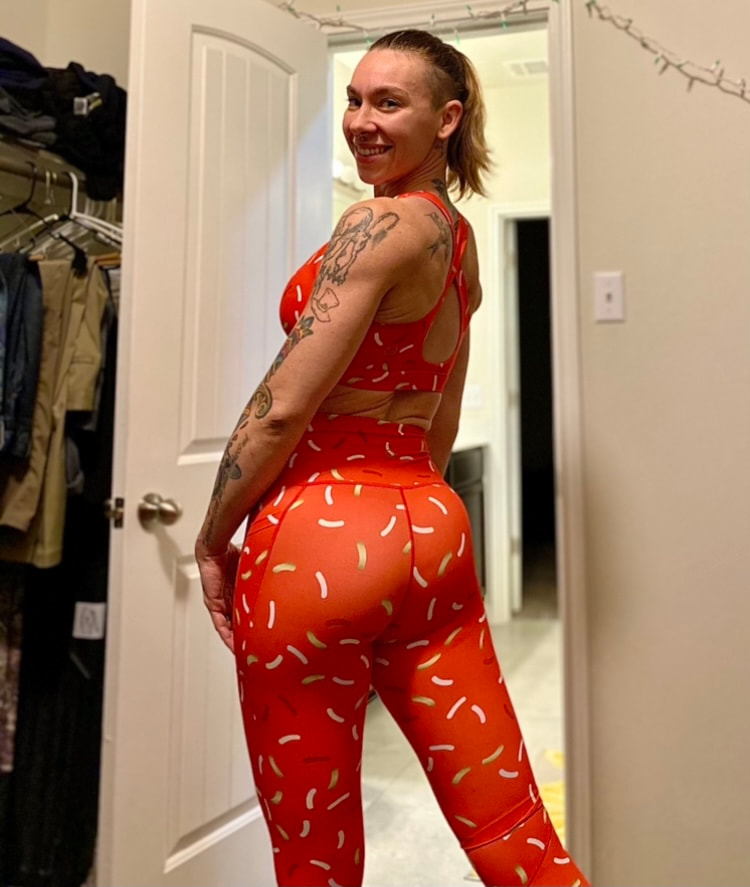 Feed Me Fight Me Red Donut Outfit: Top: Medium $20 on sale Leggings: XS $25 on sale 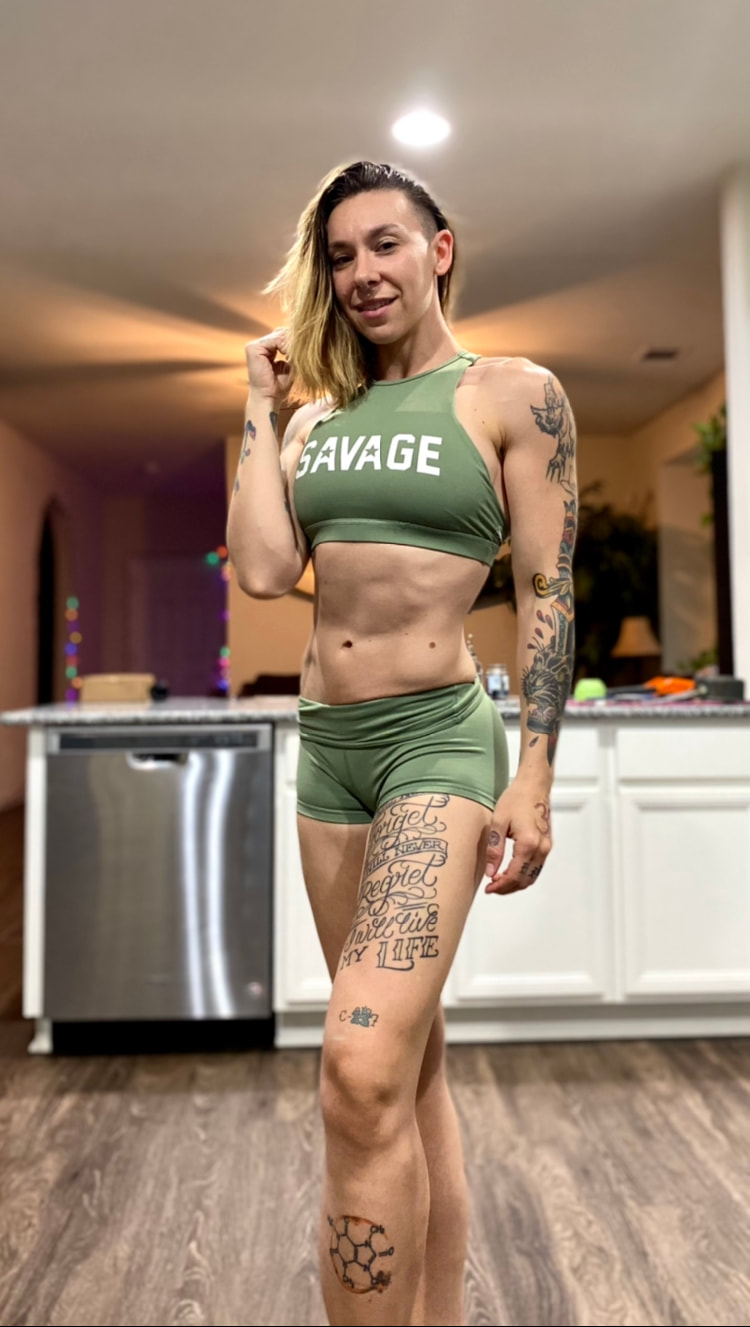 Favorite Savage Outfit:
Top: Medium $45 Regular price Bottoms: XS $45 Regular price You're scrolling through your IG, seeing all the girls in their bikinis that sparkle and holding the trophy high. You think "Wow! That's what I want to do! I'm going to do a competition and look amazing too!" Hold. The. Phone. It doesn't work that way, and it shouldn't work that way. Let's go through a few tips to mentally prepare you for the road you want to walk. 1. PREP IS NO EASY FEAT. Prepping for a show consumes a lot of time, you have to be ON all the time. What I mean by that is, you have to do the workout no matter how you feel that day. You have to eat the food, no matter how you feel that day or how badly you're craving that burger instead. You have to sleep and recover properly. It takes work. 2. YOU NEED TO LOVE YOURSELF FIRST. This is a HUGE one. If you want to step on stage because you think the way those ladies look will make you feel better about yourself, re-evaluate that thought. Bodybuilding is more than just a physical sport. It is going to make you really look at yourself and in more than a physical aspect. During my first two shows I constantly nit-picked things that weren't even there and I wasn't focused on what need to actually be done. I compared myself to everyone as often as I could instead of focusing on what I was building. I wasn't ready to see what I truly had to offer myself because I was seeking it in others. If your goal truly is to step on stage, you need to love yourself inside and out. That confidence, or lack-there-of will show through on that stage. It will show in your posing. It will show in your walk. It will show in your smile. And above all it will show in your work(body). 3. YOU NEED A GOOD SUPPORT SYSTEM. Listen, this is major as well. I did my first two shows damn near solo.... that is when you begin to really know what struggling is in this sport. If you have nobody to lean on when you don't feel like going anymore, you will quit or half-ass it. If you don't have a team to keep you accountable, you will slack. You will convince yourself that you are doing all the things you need to do, yet when show day comes and you step on stage and you aren't dialed in the way you should be... mental devastation. Instant bodily reaction in hormones, which will begin to show on stage. Having a second pair or eyes that knows what they are doing, they are experienced and well versed in the sport is also a good idea. I am a coach and I still have a coach for this, why? Because he sees what I don't, or maybe I am unwilling, to see myself. You also can't pose and see you all the time without filming, and even then... are you being honest with yourself? 4. IT'S OKAY TO HAVE FUN AND WANT TO WIN! My first two shows were to me, disastrous. I didn't place where I had visioned myself. But it was rightly deserved! Aside from not being dialed in on my nutrition and water in the leading weeks up to show day, I took everything way too seriously. I overtrained myself, working o nut around 6 hours a day. I ate roughly 1200 calories, even then that was far too little for me then. This is not a healthy way to approach prepping for a competition. 5. YOU NEED A COACH WHO HAS COMPETED BEFORE. Listen, I know it's "easier" to do things on your own. Humble ya damn self and get a coach. If you are in this to win this and not for the fun of it, then you NEED a coach. Don't just find any old coach or one who has done only one show. I may be on my third in 7 years, however I took my time between. I switched divisions and had to lose 30 pounds of muscle. I lost the love of my life four years ago and nearly broke my back 3.5 years ago. It's a journey. I never placed where I wanted in my first two shows for several reasons. 1. I did not have a coach. I was self coached. 2. I took advice from other competitors who were NOT CERTIFIED TRAINERS. Why does this make a difference? Anyone can find anything they want online, coaches and trainers have schooling to back them. While I personally do not believe this sport is for everyone it is a personal choice to begin the journey to the stage. Make sure that you choose the right coach who will give you the right tools to succeed. Not sure how to find the right coach? You can read our post on How to Choose the Right Coach for You. Since this is a highly important step, I definitely suggest starting here as the right coach will help you learn these simple mindset tricks.  It's 2021 and a new year, that generally means new goals and resolutions to hit. However this year I noticed something different on the rise as of late, that is Holism. As a Holistic Lifestyle Trainer seeing this "trending" is actually of high concern! Many do not understand what holistic health or holistic lifestyle means. Let's explore! Now there are two definitions for holistic (these are straight from google): 1. Philosophy: Characterized by comprehension of the parts of something as intimately interconnected and explicable only by reference to the whole. 2. Medicine: Characterized by the treatment of the whole person, taking into account mental and social factors, rather than just the symptoms of the disease. With that being said, how does this relate to working with a holistic trainer? When you work with a holistic trainer such as myself we take into account every aspect of your life. What is stressing you out? How do you cope and de-stress? How is your sleep? How is your mental health? How is your nutrition and eating habits? How are your daily thoughts? Do you meditate? There are SO many more questions that come into play here I won't go over. When we are stressed, sick or lethargic we cannot just blame our job or lack of sleep. Often times the real issue is buried deep inside and has something to do with a subject stuck in the subconscious. This little thought that lingers could be leaving you stressed, sleeping terribly and leaving you unmotivated without even know why. Addressing this could fix your sleep, lower your stress and bring back some of that motivation you had before. Being holistic means that you are also being mindful and taking into account things that surround you as well as those around you. Being mindful allows you to keep yourself less stressed, we become more aware and also use less resources this way. This is part of holism. Holism should also be included in our plans to save the planet. By looking at the bigger picture we can see more of what needs to be done in order to create a positive outcome. If we are only looking at fragments are parts we are missing a lot of useful information. This is the same through your health, wellness and fitness. If you are only focusing on growing the glutes, the rest of your legs and body will suffer. They stay weak and can cause further injury from not being worked in the proper manner. Being holistic in fitness allows me to really hone in on client issues and deviations and to help me understand my client much better. This gives me more of an opportunity to give a routine that is much more personalized to the individual and their goals. Taking into account their home life, work life, hobbies, wants, desires, needs and stresses allows for a better lifestyle plan to be written out. This creates ease for the client. Over my nine years of being a trainer this has been the most effective style of training my clients. They reach goals with ease and feel better about their accomplishments. By focusing on the whole they also create a better chance at a better lifestyle and self-care routine that will last them long beyond the end of training with me. My goal as a trainer was not only to guide my clients to their goals but to also help them create a lifestyle that would have a positive impact on their daily lives and those around them. Positivity is contagious, that is the heart and soul of our business here. We take everything into account when treating a problem to come up with a positive solution that will stick. Here are a few ways you can live more holistically today! 1. Meditate. Yes, I said it! Not all meditation is sitting cross-legged and silent. Meditation is about connecting with yourself and working through the issues, problems, and irritations that pop into our lives and stick in our minds. It's about being in the moment and lowering stress. 2. Exercise. Yeah, I said that too. Exercise is incredibly important. Any time I had an injury or my low back was aching it was because I did not exercise the area enough or properly. This is highly important to keeping your body going. It carries you day and in and day out and houses muscle. It is meant to be moved, if it wasn't we would all be blobs rolling around all the time. 3. Journal. Never underestimate the power of a great journaling session. Now many guys are going to read this and scoff thinking " I don't need that "GIRLY" shit." This is not girly shit just as yoga and dance are not girly shit. Journaling can help you get thoughts out of your mind and onto paper where you can read them. Analyze them. Find solutions easier than keeping them bottled inside. Sometimes we just need to vent and that's what a great Brain Dump journaling session is for! 4. Practice more self love. Now this one is very tough as we do not teach it at a young age in this country (I'm not sure about others). Self love and good fitness are highly underrated here. When you love yourself it shows to others. They feel that good energy and they want to feel good too. Loving yourself allows you a more relaxed day. You move about with more confidence which can allow you to achieve more and be more productive throughout your day. We must learn patience with ourselves as well. This is part of self love. Now that you have a better understanding of what Holism is, I hope that you can take a few of these wonderful ways and incorporate them into your life today! 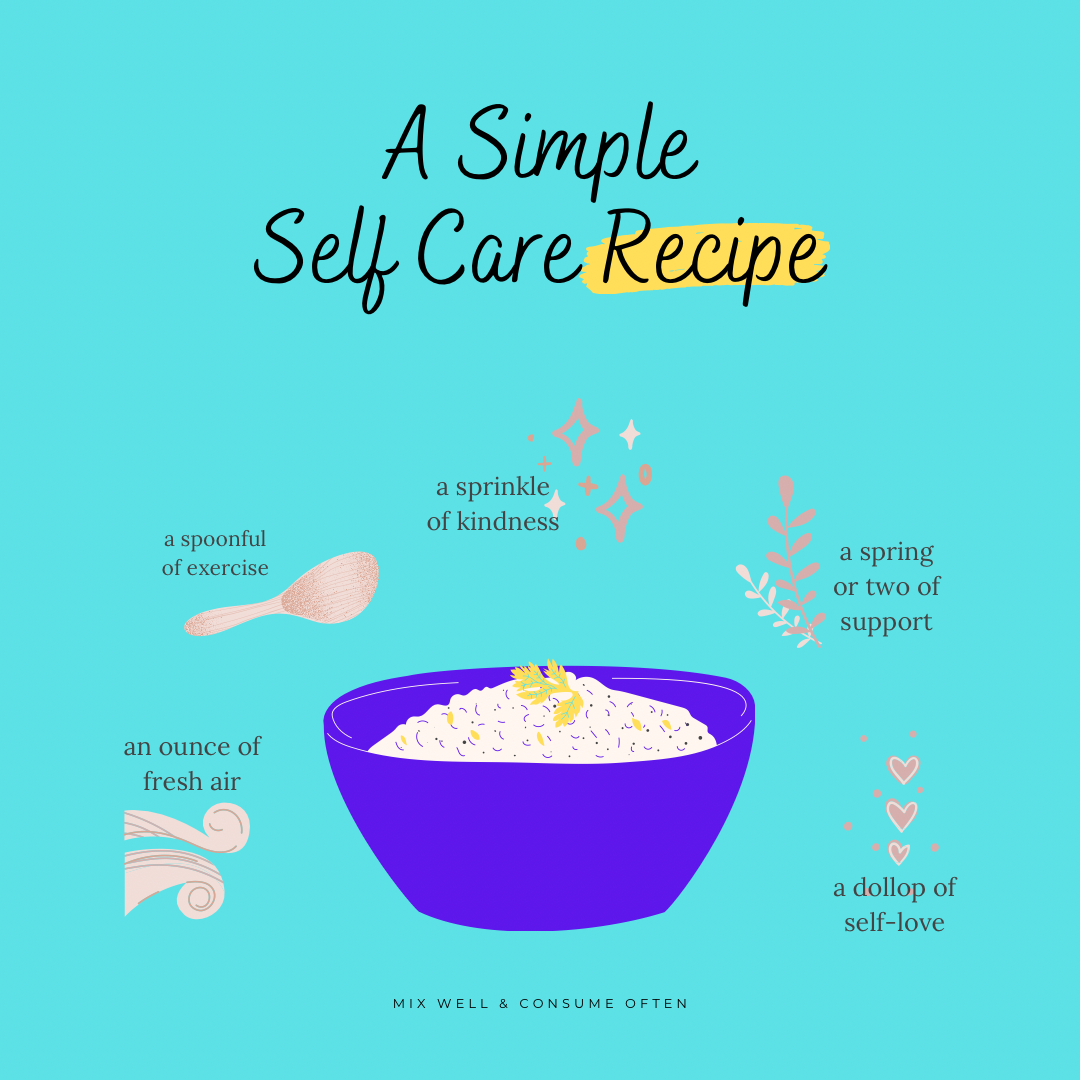 It's the new year and many individuals are getting a start on their New Year's Resolutions. Looking through YouTube channel after channel, buying pre-made programs off of bodybuilding.com and even hiring trainers/coaches. I want to talk about how to pick the right coach or trainer for you. This is a very common question I receive often, is, "Kaie, how do I know I've chosen the right coach/trainer for me?" Let's explore that. 1. Research the coach you're interested in and grill them. Listen, if you want to work with someone then you need to quiz them. Research them. Ask them questions like, "How did you get started?" and "How can you help me better than another coach?" Asking questions also allows you to know the coach you're interested in. 2. You must vibe! Coaches and trainers do not sell training, they sell themselves. Think about it! If you've had a coach/trainer before then you know you purchased that service from them because you liked them. Not every coach is going to vibe with you. They could be giving textbook cues they learned in school that just aren't registering with you. The style of training could be what you're looking for, but the conversations and understanding are lacking. It is okay to let a coach/trainer know that you don't think you will be a good fit for one another. The coach you took that free session with or consultation with is going to respect and like you even more for just being honest. 3. Is their style right for you? Not all trainers are created equally. While we should all know the basics of training someone and lifting, fitness, and exercise, this does not mean we all carry the same knowledge in other areas. If a trainer/coach tells you that they know everything about a subject or everything about everything in the fitness world, run. Find another trainer to research and possibly work with. This is a huge red flag. You want to find someone who is knowledgeable in the area of fitness you are interested in. This could be lifting, powerlifting, bodybuilding, functional training, or even just guidance to understanding how the machines in the gym work to begin with. 4. Do they look the part? This is a pretty big one for myself. If I approach a coach that doesn't look like they are healthy and fit, I DO NOT WANT TO WORK WITH THEM. There is a very big difference between knowing something and being able to apply it. If a trainer cannot apply what they have learned in school to themselves, that shows me they cannot fully apply it to me. 5. A good coach/trainer will let you go. I said it! Yes, a good coach will let you go. They understand that some clients outgrow them, change interests, change goals, or even just feel educated enough and confident enough to continue on their own. This is my own goal with my clients, to educate you to the point that you no longer need me. A good coach also knows when it is time to let you go and informs you of this. I have let clients go in the past because we no longer vibed together, we passed our prime and they are no longer learning anything that is progressing them further from me. So it's important to find someone willing to let go. 6. Not all trainers want to hear your problems. In my training sessions I often talk to my clients about their day, emotions, and any situations that go on. I have formed myself into a type of coach that is also a mentor and counselor of sorts. Or as I like to call it, a friendselor. Not every coach/trainer wants to have these kind of discussions during your session. Often times they want to see you through the session and focus only on this. So if you are looking for someone who is willing to listen to you during your session, make sure you do that. Otherwise you are going to hate your sessions, they will be unenjoyable and you won't see progress. 7. Cookie cutters are for cookies not bodies. I worked the front desk of Gold's Gym for 5 years before finally being transferred to training. I sat back there and watched trainer after trainer hand out the SAME WORKOUT TO EVERY CLIENT! Now, this is no way to get your monies worth! Your body is not like my body. And my body is not their his body or her body. You see? Finding a coach who is knowledgeable enough to personalize a program for you is going to allow you more bang for you buck. 8.Coaches who give 8 week transformations. While I offer pre-made programs I do not push them or promote them often. I do this because I prefer to work with individuals one on one. I want to see what you're doing and how we can correct it if need be. The 8-week transformations are often just a marketing ploy to suck you in. Those people who do them are not fulfilled or happy. And if they are, often times it's very temporary as many do not continue to seek what will keep them going down the right path. An 8-week transformation program can be motivational, however it is not personalized. This is another reason I hesitate to give online training programs as well. If you have not worked with me in person, I won't be able to keep you safe. To know what your movement patterns are. I have several clients that began with me in person and have moved to online. They have the experience not only with myself as a trainer but also just being in the gym and comfortable in their movements and sessions. Without seeing in person, it is too difficult to program for deviations and corrections. Every program works if you follow it. When you finish it... that's the real test. Where are you going next? 9. A good couch preaches and teaches self-love. A great coach/trainer will teach and preach self-love all day long! Why? You will see better results if you become confident and learn to love yourself. It's not about trusting the process, it's about trusting that your trainer knows what they are doing for you and it's the right style for your goals. This is what you hired them for. You must trust they will help you achieve confidence and learn that self-love so that you may continue training in any regard happy. 10. A program is only as valuable as you think it is. This is a huge one for me. When someone asks me "How much is your training?" I already know I am not the right fit for them. Someone who is ready to make solid changes or reach a goal doesn't look at cost. They know that a great coach/trainer has the knowledge, experience, and drive to get you to your goals. They are worth the value that YOU place on them, not the cost of the plan. So now that you have a few tips on how to pick the coach who is going to better you, I hope you find the person who you need at this moment in time. If you'd like even more ways to spot a great coach for you, I suggest the wonderful podcast Level Up, Episode 27. These awesome ladies will give you some amazing insight and may even sway your mind a bit toward investing into a coach versus an online program. 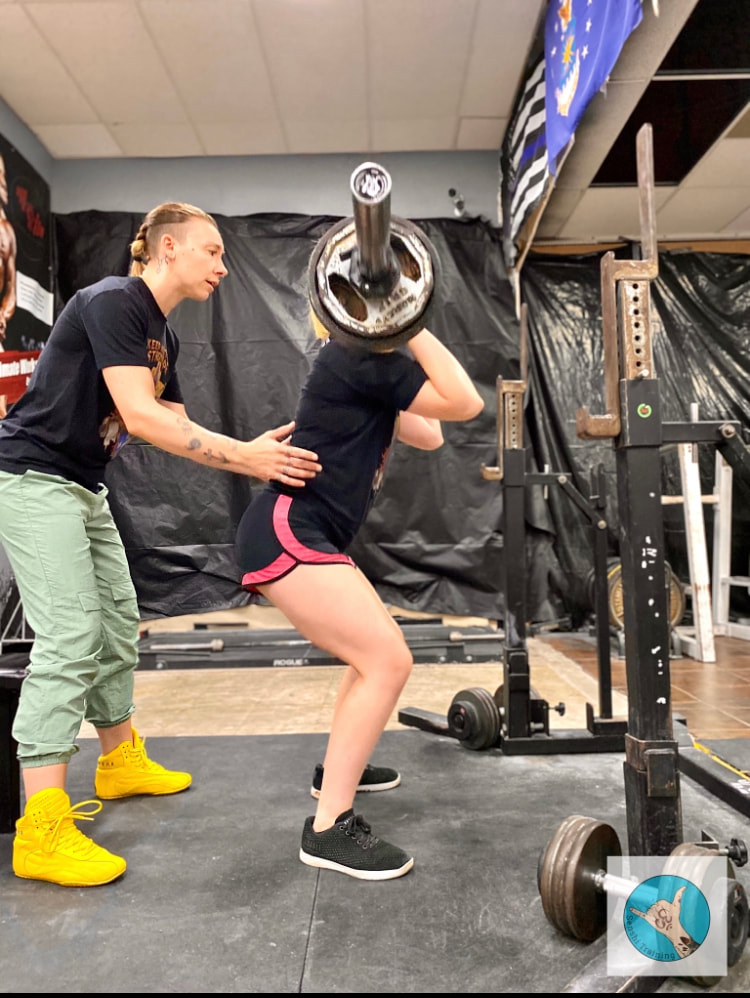 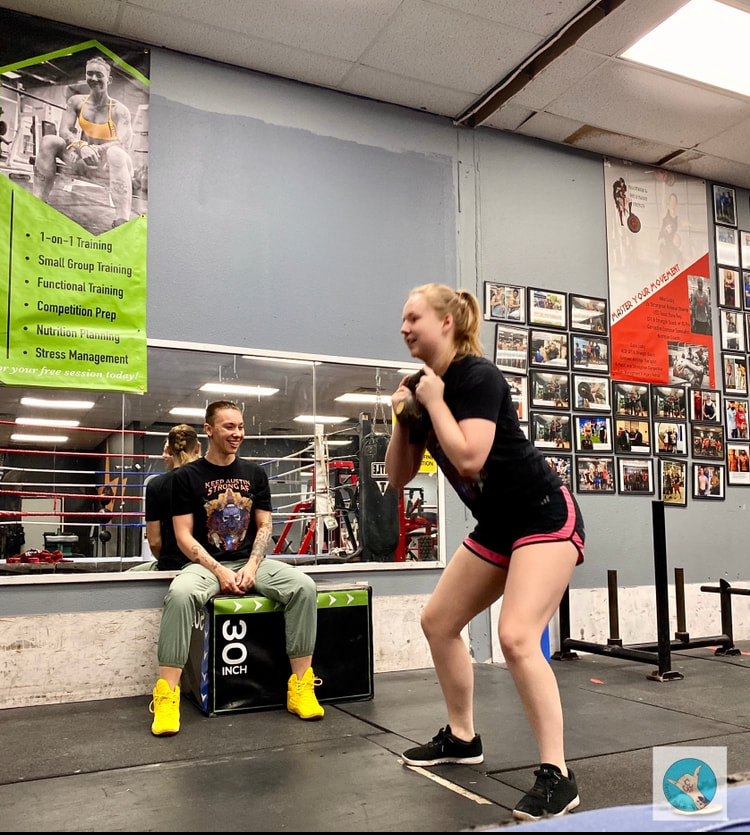 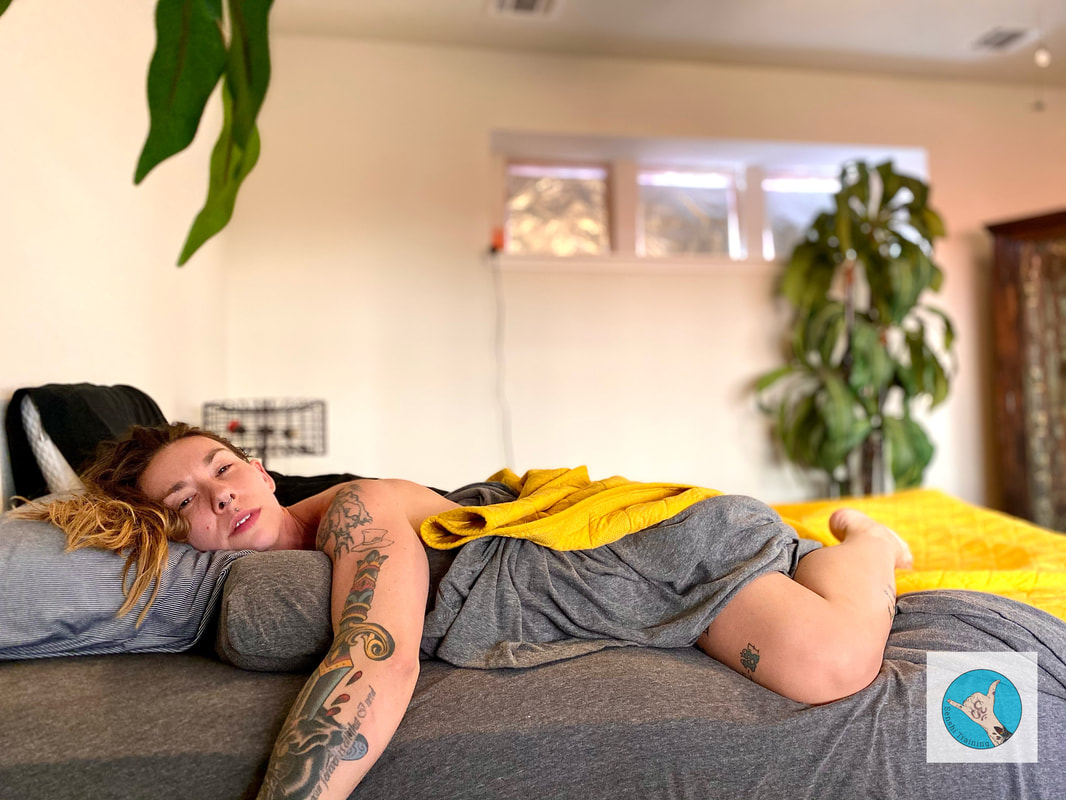 Sleep is something that almost everybody loves, including our own body! It is also something of a troublesome burden to many of us as well. I often am asked how I can wake at 3 am daily and go to bed by no later than 8:30 in the evening. That is quite the day, and I do begin working at 3:30am with household chores, meal prepping, etc and off to my actual day job. When I arrive home I do more chores and work that can be done at home. This equates to a lot of work and makes many wonder how I get to sleep. I do nap for starters. I find time to be able to lie down for 45-60 minutes about 2-3x per week. I only do this when I am feeling incredibly exhausted or had a restless nights sleep the night before. While my sleep is great most nights, just like anyone else I still have restless nights that leave me feeling groggy in the morning and wanting to stay in bed. As we all know, sleep is imperative for recovery, focus, and energy the following day. Nobody wants to wake up groggy and hating life, their body, or the way they feel. Here are some tips to set you up for a successful nights sleep and following morning. 1. Know your chronotype. If you aren't sure what a chronotype even is, this is your DNA telling you if you are a morning person or a night owl. Ever see someone get up and be full of energy first thing in the morning, no caffeine and spritely as the sun? (*coughs* ME) This morning energy upon waking is an indicator of what time you should be rising from your slumbers. If you aren't sure of what your chronotype might be, take a look here to take a quiz and find out more about how your body cycles it's circadian rhythm. I am a Lion. (Image below from sleepadvisor.org) 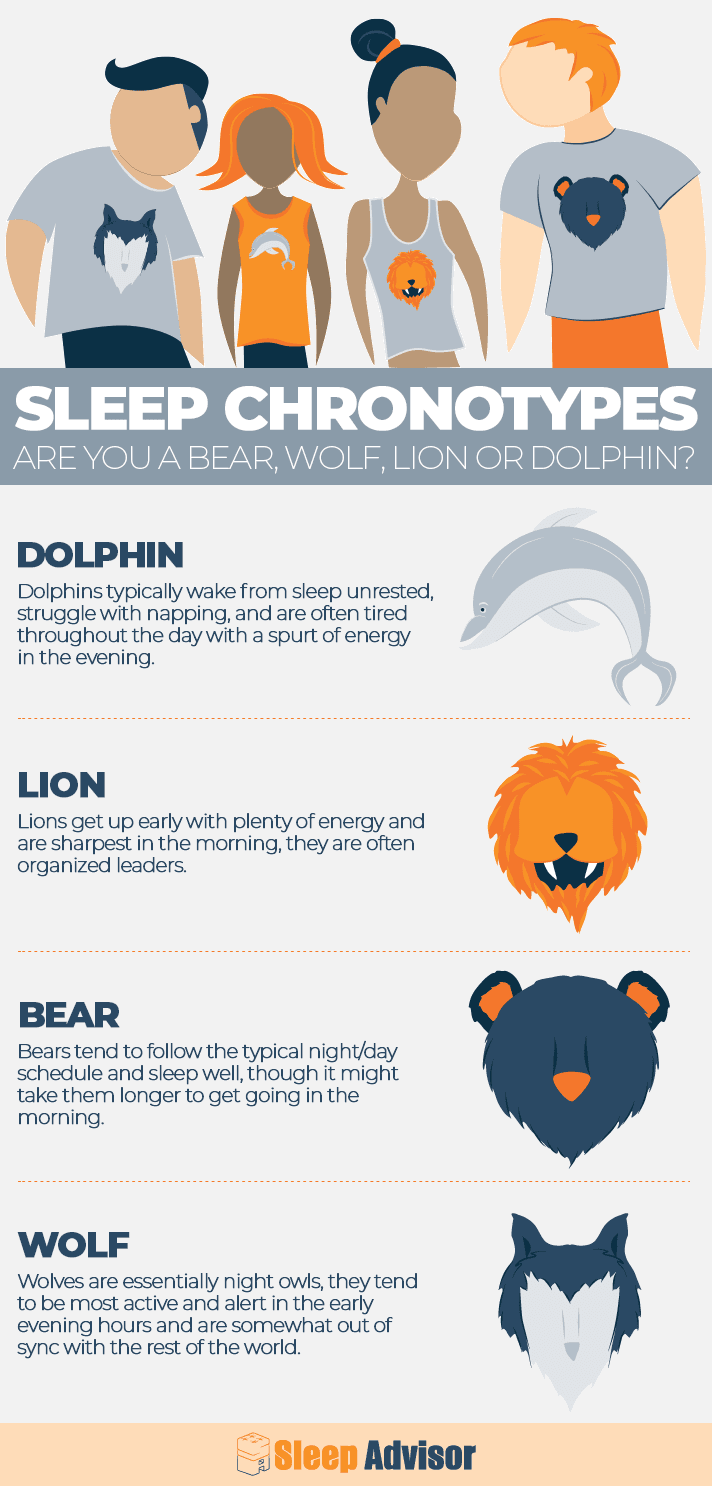 2. Limit your screen time & light exposure. This one is pretty tough for most of us nowadays. Our phones are often right by our side if not right in front of our eyes. The blue light from screens causes the frontal lobe to stop producing hormones such as melatonin. Without melatonin we have trouble falling asleep and staying asleep. Blue light can make you feel more alert, awake and energized. "Photo receptors in the eye, which link to the areas of the brain that control alertness, are most sensitive to blue light. Therefore, when blue light hits them, the receptors set off activity in those brain regions, making you more energized," says Shadab A. Rahman, Ph.D. By limiting our blue light and regular light exposure we allow the mind time to calm and begin producing the hormone melatonin again. We begin this process in our home around 3-4 hours before we go to bed.
3. Light therapy. This has been a really great one for us since we moved into our new home. We have red and green lights everywhere! We use them to help calm the mind and body. Red lights help our bodies produce more melatonin and is recommended to be in about 30 minutes before bed. (We turn ours on about 5pm and are in bed around 7:30-8pm) Red light therapy also increases your performance for the next day by aiding in a restful nights sleep from production of the hormone melatonin. You cannot sit in a red light and stare at a blue light from your computer, phone, or tv screen. It will not be affective. They counter each other, one brings you alertness and the other brings you sleep. 4.Find regularity. This seems to be a tough one for many individuals. Often times I hear from friends, family and clients that they sleep in on their weekends to catch up on sleep. I'm about to burst your bubble so be prepared; There is no such thing as catching up on your sleep. (The podcast from Found My Fitness with Dr. Matthew Walker explains this further) Having a set schedule for your sleep can aide in a better nights sleep. Finding regularity means that you're in bed and going to bed at the same time every night and awaking at the same time every morning. Often times we lie down and reach for our phones. There is that blue light causing massive activity in the brain and blocking that melatonin production. Put it down and actually close your eyes. You will fall asleep! 5. Stop eating crap. This can be a tough one for a lot of individuals as well. I hear everything from " I can't afford to eat healthy it's expensive!" to "I don't like to cook, it is so much easier to order in." It doesn't matter what "healthy" restaurant your food comes from, the best is from the store to your home and into your frying pan. Where you can control the amount of sodium, fats, sugars, and other preservatives and chemicals put into foods to keep them "fresh". The lack of vitamins and minerals combined with preservatives will cause inflammation and an imbalance in the hormones. Eating wholesome and healthy foods for your body and goals will help you catch some better and more restful zzzz's. 6. No alcohol. Nowwwwww I know what you're thinking, "Kaie! How dare you! That is NOT my problem!" Wellllllllllllllll it very well could be a huge contributing factor. First and foremost alcohol is poison, sugar mixed with poison. One drop will stay in your bloodstream for roughly 2 hours. Sugar, as most of us know, causes inflammation and issues with the function of our frontal lobe much like alcohol. Alcohol also causes hormone imbalances and vitamin and mineral deficiencies and an inability to absorb and utilize vitamins and minerals. Alcohol is also a depressant, in other words it's a downer and it will make you sad. It interferes with the communication from the neurotransmitting receptors that line your stomach to your brain. A disruption in, not only the hormone production of the brain, but also the guts. If you must drink in the evenings, do it many hours before your regularly scheduled sleep time. 7. Meditate. Many individuals respond to this with a big, fat "HELL NO! I CAN'T SIT IN SILENCE THAT LONG!" Meditation is not about sitting in silence. It is about quieting the mind and body. It is about calming the self and reconnecting. On the scientific side it quite literally helps your hormones balance out to a proper homeostasis baseline. Letting go of the days mishaps, anxieties, fears, and worries can also help us sleep. Reminding us that tomorrow is a new day, with new and better opportunities. I often write down specific affirmations to help my subconscious know we are allowed to sleep well and sleep deeply. Here are a few examples: "I give myself permission to sleep deeply." "I let go of all tense thoughts." "I did my best today and that is good enough." "I did all that I can physically do today, that is enough." 8. Exercise regularly. Here is another tough one. Most of us find exercise tedious and a nuisance, this is largely because it is not a focus of the American culture and is not emphasized toward an overall healthy lifestyle. Exercise is another activity that can help us balance hormones and keep us at an even keel homeostasis. Nobody is asking you to step in the gym and go HAM for hours, we simply ask that you do at least 20-30 minutes of vigorous exercise daily. This will help you sleep better, eat better, manage life better all around. Now that you have a few great tips and tricks to help you sleep, I hope you can begin to change a few things around and get the restful sleep you deserve. The holidays are such an insane time of year.... or rather all year. It seems as though there is ALWAYS something to have a holiday over nowadays! However I would like to focus on the major ones that fall from September to January. This period of several months brings in much stress, thrown off schedules, over-eating and bad habits resurface, delayed self-care, and money spent we don't have/want to spend. Many of us struggle during this time of year. As we come a close on it I would like to encourage you to keep a few things in mind as you move into 2021. 1. Do not put yourself in debt for others and things. I find so often around, especially the Christmas season, individuals will drop their self-care routines to buy things for others they don't actually need or want. I often see others complain when they do get the thing they wanted, "Oh, it's great.... I just wanted the green one not the purple one and my size is wrong!" Okay..... take it back, don't be ungrateful. Why waste money on those who are not grateful for even the thought of wanting to purchase them a gift? 2. Spend your time wisely. This holiday season I had many clients share their stresses about the holidays with me and they ALL involved seeing family members they don't enjoy spending time with, being in situations with family members that stress them out, or being around anyone they just don't want to give time to. So why do we do it? We were programmed and trained to feel terrible if we aren't spending the holidays with our families and loved ones. This is so untrue. If someone makes you feel terrible and stresses you out, cut that toxicity out. 3. Family are the people you choose to keep around you, your relatives are just that. Blood relatives. As someone who comes from the most loving and accepting family I have ever met, this is so important. My parents taught me at a young age that your family is not just those who are blood relatives, they are the individuals we keep around as our main support system. These are the people we should be surrounding ourselves with through the holidays. 4. Self care should never waiver during the holidays! Over the holiday season so many worry about their weight and how they will manage their diets. If you continue your normal routines and incorporate your holidays appointments and shenanigans into your daily routine then you will be more present for them. You will be more energized and able to be in the moment. When we take a bird-walk away from our normal routines we become anxious, stressed and worrisome. If you are the person waiting on someone to finish their gym routine, meditation or other self care item and you tell them they do not need it..... they do not need you. This brings me to my next helpful point..... 5. Be understanding a patient. It's not YOUR life. You cannot control what others will do. It is their life, let them live it. If someone in your life would like to start their Christmas morning at 5am with a gym workout and THEN come over... odds are you aren't awake at 5am so let them do their thing! They are most likely letting you do yours. Be patient with people and their own routines. Be understanding that that is not your life you are only a part of theirs. And because THEY allowed you to be. Family or blood relative we should all feel grateful for those in our lives and respect THEIR daily routines and daily norms. 6. An extra plate is not the end of the world. So many individuals fret over having too much food or an extra slice of pie over the holiday season. Pro tip? Don't! Your body is a machine, it needs food as fuel. What you do with that fuel is what you should be concerned with. If I have another brownie, or a second plate because I still feel hungry I workout a little harder. Add just an extra ten minutes to my cardio. The food you ingested is nothing more than fuel. You should not feel bad about the occasional holiday indulgence. If you are on a fitness and wellness journey, do not beat yourself up or restrict yourself. This causes hormonal changes that create stress, water and fat retention, and secretion of cortisol and norepinephrine. All things we want to avoid for the holidays so we can enjoy it better. When next holiday season rolls around in 2021 I hope you follow these few and simple tips to help you through the Thanksgiving and Christmas seasons. We never need to fret, stress, or burnout for another or even ourselves.  At one point in time we are all new to the gym. The clank of the iron, everyone grunting, sweating and breathing loudly. This can all feel, look and seem very intimidating to a newcomer in the gym. I am here to tell you, everything is alright and there is nothing to be intimidated by! Here are some tips to help you get more comfortable with being in a gym setting. Tips to help you succeed and continue your journey rather than become discouraged and quit only a few short weeks after beginning. 1. Program it out! First and foremost, if you are new to the gym have a plan when you arrive. Don't just come in and start going HAM on every piece of equipment you see. Having a plan sets you up for success, it also helps to keep you on track, focused and calm. 2. Music on world off! This is a pretty important one even for a seasoned gym-goer like myself. Having music that YOU enjoy can boost your mood, hormone levels and give you focus to get through that workout with gusto and ease. Another thing to remember is that you won't always like the music playing in your new gym, and this is not something as a member we can control. Headphones allow you to get into your zone and focus on the movements at hand. 3. Colors are energy! If you are lacking in a little energy or motivation grab yourself a great, bright colored outfit! There is science behind how colors affect our mood, you can read that here. You can also purchase a new outfit to show off! Being in something new always makes you feel better, don't neglect that feeling! 4. Sweat baby! As a trainer, I often hear ladies tell me they don't want to sweat. I am here to tell you, get over this. Sweating is great for you! You lose excess fat (very small percentage), excess water weight, and toxins. Sweating is great for your skin as well! Sweating out impurities in the body for a healthier living. 5. Take it slow! Whoever told you that you have to go HAM in the gym, slap them. You are new! Are you trying to get hurt? Keep in mind, the members you see around you that are already in shape have gone through their journey. They have taken the time to put in the work, it didn't happen overnight. Allow yourself time to take it slow. Plan your workouts, plan your recovery meals, plan your rest days. The important part is that you got up and made it to the gym to get active and take care of yourself today. You do not need to be an elite level athlete/gym-goer to achieve your goals or call yourself a lifter. 6. Down time! If you're like me and being in a crowded gym after work gives you anxiety, try to find off-peak times to sneak in a workout. Many times the gym is going to be busier in the couple hours before everyone jets off to work, between 6-8am, and again when they are finished with their work day, between 4-7pm. If you aren't yet comfortable with being in the gym, these are not your time to go workout. Your best bet is to go between 9-3. 7. If you aren't sure, ask! Listen, if you aren't sure of how a piece of equipment works or how to perform a specific movement, GRAB A TRAINER! Do not grab your front desk, they don't know anything and often times ARE NOT A CERTIFIED TRAINER. Trainers help keep you educated and safe, the front desk knows what they are shown, what they may have learned from a trainer in their sessions, and what they have been told by their managers. They are not here to help you in a fitness aspect. They take care of billing, other gym issues, and so on. ( I worked at a golds front desk for 5 years before becoming a trainer.) Keep in mind that a great trainer will help you and give you pointers and tips, don't take advantage. If you have that many questions, purchase a month and learn something for yourself and about yourself. Don't be THAT guy who can't ask for directions. ;) 8. Go your own way! Don't worry about what the bodybuilder who has been lifting for years is doing. What the powerlifter/strongman athlete is working that day. Don't allow the bang of the HEAVY weight hitting the floor deter you from your own workout. In other words, focus on what you are doing rather than what those around you are doing. Many times we are off in our own world and unaware of what is going on around us. While this is something I fully disagree with at times it can be useful. In the gym it's okay to do your own thing and not worry about those around you. Keep it mindful though! Put your weights back, wipe down your equipment, and watch how close you get to others. You would not want the same for yourself, right? So as you plan out your New Years Resolutions for your fitness, wellness, and health journey keep these few gym tips in mind! It never has to be difficult or cumbersome. Get a plan and stick to it. Unsure, ask questions this is how you learn and grow! Happy gaining! 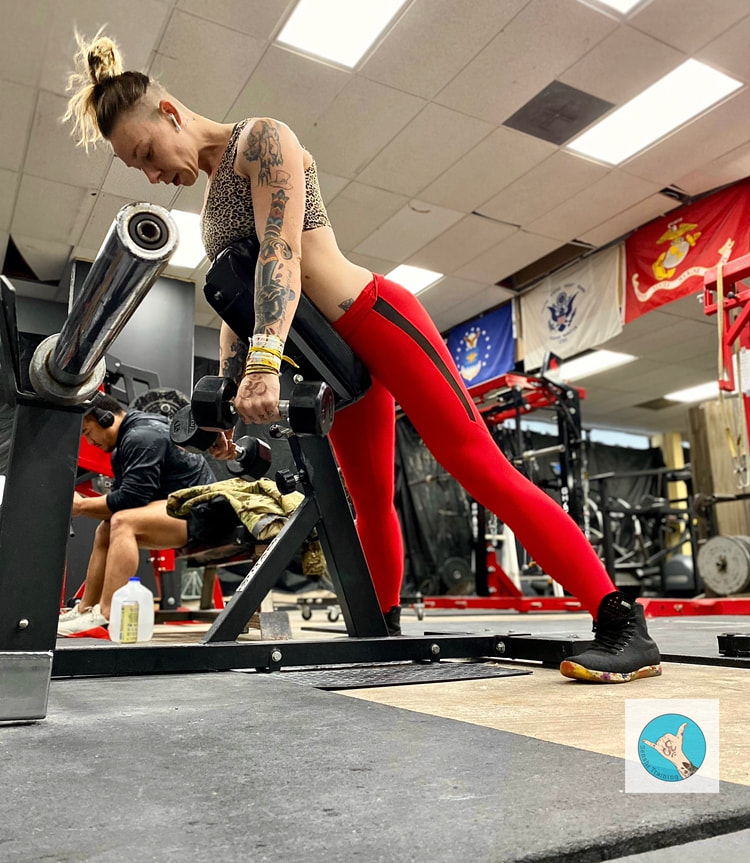 Hello once again Warriors! A couple of common questions I am asked is "How do you make your smoothies?" and "If you don't use ice, then what are you using for liquid?"So I thought I would sit down and take a few minutes to write out a bit of the process I use. Go over a few Do's and a few Don'ts as well as a bit of why's. Let's first tackle what I use for liquid if I don't use ice and why I don't use ice. Personally, it waters down the smoothie. When I think of a smoothie I think of a thick, creamy, milkshake like texture. MMMMmmmm! Adding water, even frozen water is going to thin this out. Adding too much water, or ice can also hinder the fats from coconut, almonds, avocados, etc to bind with other nutrients from other fruits and supplements in the smoothie to aide in transportation in the blood stream and body. Generally you want to leave a little room at the top to ensure a thick, milkshake-like texture in your smoothie. Next, handfuls of fruit is all you need. We think we need a ton of fruit and supplements to make a smoothie. One handful of fruit, each kind you like with some liquid of choice and you are in business! When it comes to adding in supplements the saying is something about the kitchen sink.... anywho, I disagree. I put quite a few supplements in our smoothies daily. We often use:
Leave your smoothie a good thickness. If it's too runny, you really have juice not a smoothie. Smoothies are more of a good, thick milkshake-like texture. All fruits and supplements should be blended smoothly and without any chunks before removing from the blender. This takes a pretty solid two minutes usually, depending on your blender. So next time you reach in the freezer for your fruit, think about how you want that smoothie to taste. Refreshing? Sweet? Dessert like? Tangy? Earthy? Then experiment with those ingredients! 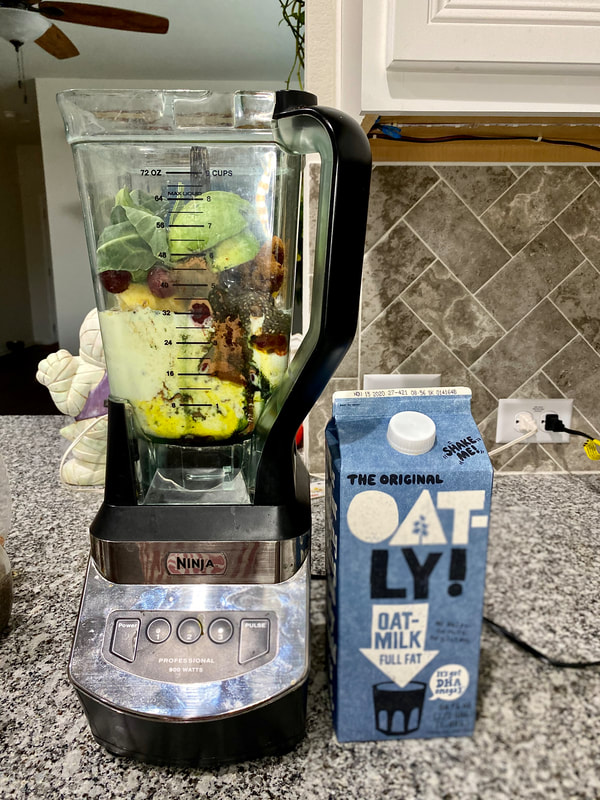 Fill your blender with fruit, veggies, a liquid base you like, and supplements you like. 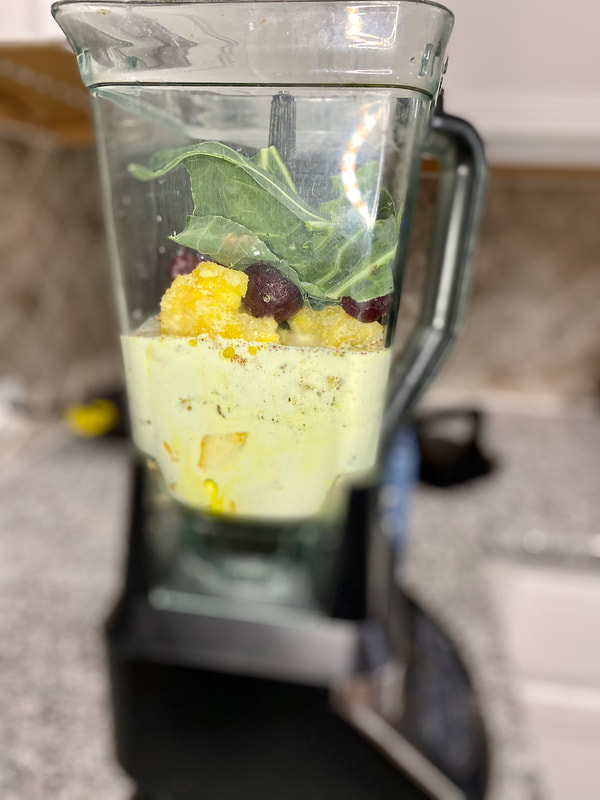 Fruits like cherries are very liquidy when they are blended, same with veggies like kale. Remember to leave a little room to compensate for liquid from the fruits and veggies. 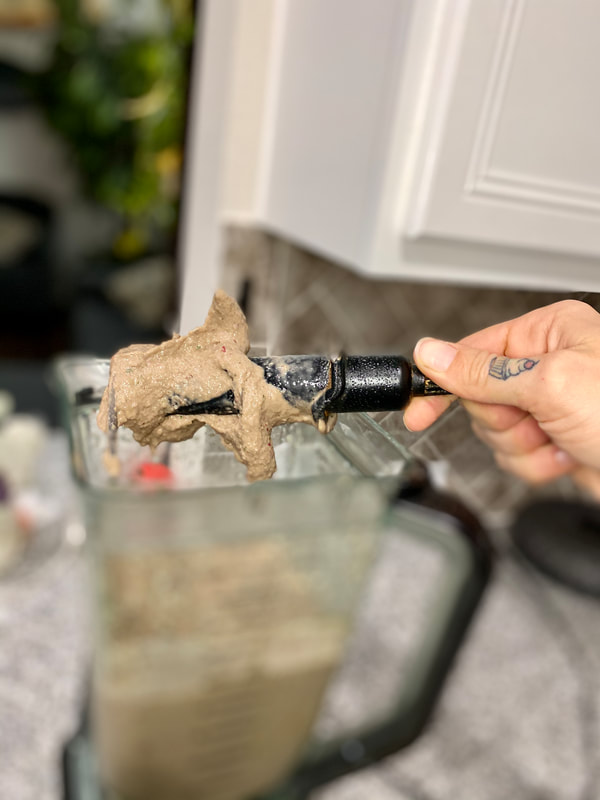 A thick smoothie is a delicious smoothie! Remember if it's runny, you have juice! **side note, not all smoothie are bright and eye-catching colors. This is why food dyes were invented. Keep your food organic and natural.**
|
Note from the Team.The blog about everything from mindful eating to healthy fat loss, drugs, natural supplementation and more! Archives
November 2021
Categories
All
|


 RSS Feed